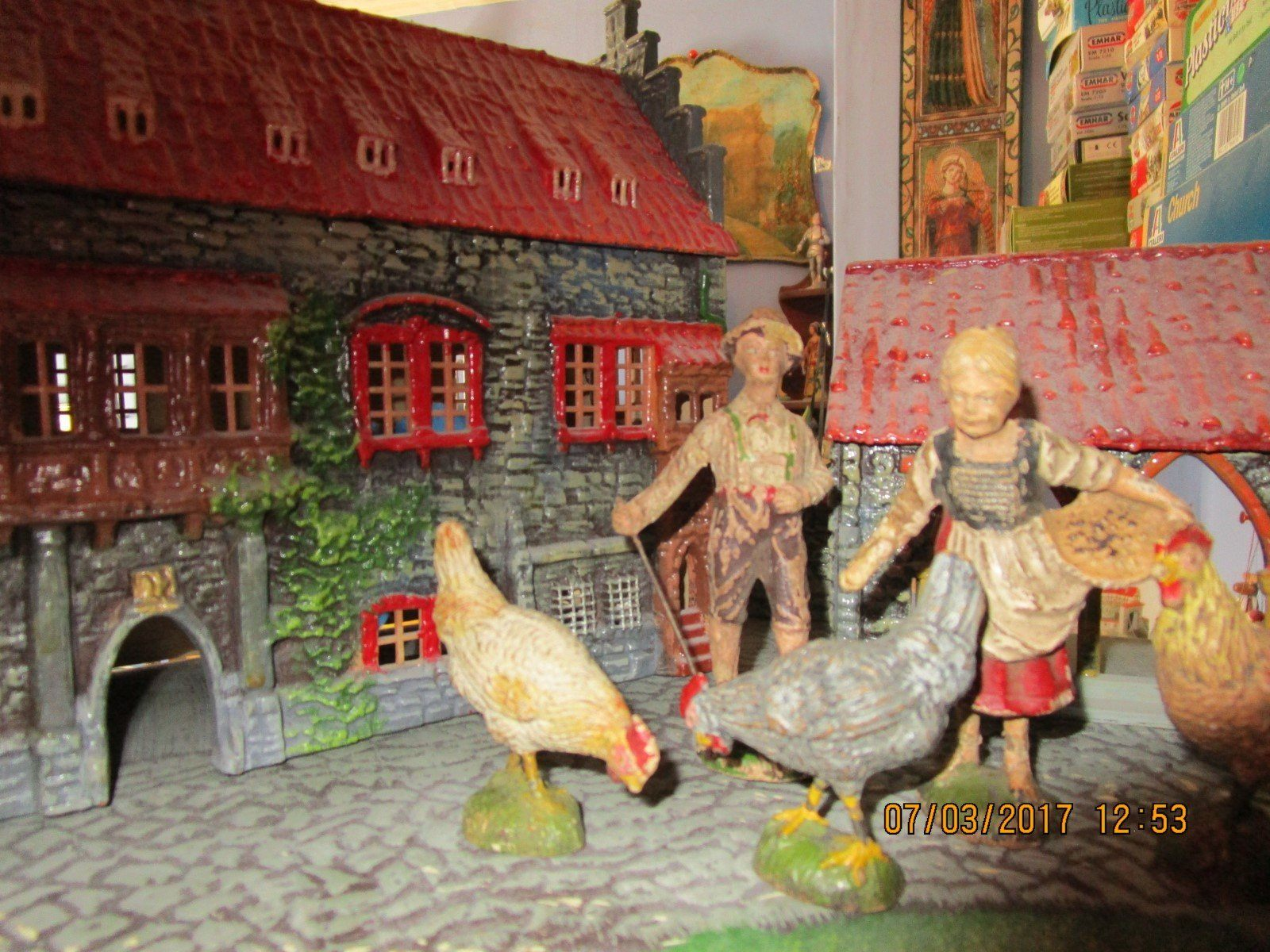
In a corner of the Elastolin Kingdom, Helga and Heinholt were well known for raising the largest chickens… 1950s Elastolin Castle #9768. Scale Compatibility: Designed to complement 40mm and 70mm figures. The Composition fowls and figures are also Elastolin, manufactured by O&M Hausser, founded in 1904…
Notable Sets: The Elastolin Castle #9732 became iconic thanks to its use in the 1967 wargame Siege of Bodenburg, which helped inspire early tabletop gaming culture.
The Siege of Bodenburg is a landmark in the history of tabletop gaming—a 1967 medieval wargame created by Henry Bodenstedt that helped lay the groundwork for modern role-playing and strategy games.
Here’s why it’s such a big deal:
🛡️ Gameplay & Setup
- Played on a 6′ x 6′ tabletop divided into 4″ squares.
- Used 40mm Elastolin miniatures and the iconic Elastolin Castle #9732.
- One player defended the castle with knights, archers, and footmen; the other launched a siege with Huns, catapults, siege towers, and ladders.
- Victory depended on eliminating all the defender’s knights or capturing the castle within 15 turns.
🎲 Historical Significance
- First published in Strategy & Tactics magazine (1967).
- Featured prominently at Gen Con I in 1968, where a young Gary Gygax (co-creator of Dungeons & Dragons) was seen playing it.
- Inspired Jeff Perren to develop his own rules, which he shared with Gygax—eventually evolving into the legendary Chainmail system.
🏰 Legacy
- The game was a clever promotional tool for Bodenstedt’s hobby shop in New Jersey, showcasing the appeal of Elastolin figures.
- Its influence can be seen in the DNA of fantasy gaming, from Chainmail to Dungeons & Dragons and beyond.
 egoboy.com
Leave a comment